
☕🌳 Coffee and Trees – Episode 4! 🌳☕
Welcome back to Coffee and Trees, the blog where we talk about two things we love. In Episode 4, we’re visiting Unlocked Coffee Roasters in Westend Greenville and finally talking about the notorious Bradford Pear.
Let’s dig in!
☕ First Up: Coffee ☕
Our 10-Point Coffee Shop Review System
Every shop we visit gets scored using the same ten categories, divided into Menu, Location, and Workability:
Menu
- Beans
- Drip Coffee
- Pour Overs
- Espresso Drinks
- Non-Coffee Options
- Food
Location & Atmosphere
7. Vibe
8. Seating
Workability
9. Work-Friendliness
10. Parking & Access
Each category is rated on a 10-point scale and averaged for a final score out of 100.
Unlocked Coffee Roasters Scorecard
Overall Score: 89/100
| Category | Score |
|---|---|
| Beans | 9.2 |
| Drip | 7.9 |
| Pour Overs | 8.2 |
| Espresso Drinks | 9.9 |
| Non-Coffee Options | 7.9 |
| Food | 8.0 |
| Vibe | 9 |
| Seating | 9.4 |
| Work-Friendliness | 9.6 |
| Parking/Access | 9.6 |
Overview


Husband-and-wife founders Andrés Camargo and Rocío Salazar are a powerhouse. They moved to Greenville from Bogotá, Colombia, in 2016. Andrés came with a business background; Rocío brought design and strategy expertise. But for them, coffee is never just coffee — it’s a way to tell stories, build community, and express culture. Their journey hasn’t been easy, especially opening a coffee shop smack in the middle of the COVID pandemic, but they made it through and have given Greenville something truly special.

I first met Andrés in 2020. Right away, I admired his courage — here he was, launching a coffee shop during a global crisis. I rooted for him and visited as often as I could. When things started opening back up, he even sponsored some nonprofit events I was involved in by donating coffee.
Later, after several years of back and forth with the most beautiful girl I know, Unlocked Coffee became the place of my first-ever date — and now we’re married, so suffice to say, the date went okay.
Honoring Heritage Through Direct Trade
Coffee isn’t just a product to Andrés and Rocío — it’s a vital part of Colombian culture. I’ve even been told that other South American countries sometimes refer to Colombians as Los Cafeteros (“The Coffee People”). Yet, today’s coffee market often shortchanges those farmers, paying prices that threaten the survival of their farms and traditions
“We want to develop a direct relationship with the farmer so we can pay a fair price. Our goal is to be a bridge between them and the United States,” Andrés explains. Through this approach, they support heritage farms that might otherwise be forced to sell their land or switch crops.

Beyond sourcing exceptional beans, Unlocked Coffee Roasters is deeply invested in the Greenville community. Before their shop even opened, Andrés and Rocío committed to partnering with Mill Village Farms and Shepherd’s Gate Women’s Shelter, aiming to provide homeless women and local youth with work skills, education support, and meaningful employment (https://www.hispanicheritagemonth.com/post/unlocking-potential).
“They will find more than a job,” Andrés says about his future staff. “They will find a place where they feel secure and loved.” Rocío challenges her future employees: “Maybe you have the discipline and the characteristics of a business owner!” Having built and run her own advertising firm in Colombia, she’s passionate about nurturing the next generation of homegrown entrepreneurs in Greenville.
A Columbian love letter to Greenville
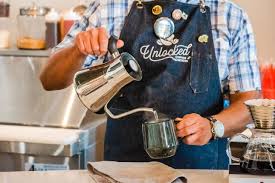
Andrés immigrated to the U.S. at 19, settling first in Connecticut, where coffee shops became his sanctuary — a tiny community where everyone knew his name. When he arrived in Greenville, he immediately felt a warmth and connection he hadn’t found elsewhere. “When I say I love Greenville,” he says, “I feel this is as close as I could possibly get to my country” (https://www.hispanicheritagemonth.com/post/unlocking-potential).
Rocío adds, “People here are always welcoming of diversity. When they hear the business is owned by a Hispanic couple, they say, ‘Oh, that’s wonderful!’” She’s been touched by notes from Colombian natives in the area eager to reconnect with the authentic coffee experience they remember.
Creating a welcoming space for all cultures to connect is their gift back to Greenville. Andrés sums it up: “The business model is intentional — a way of blessing other people. We are building it with love; we are building it with equality”
Location and Vibe

Unlocked is colorful and distinctly Colombian, but it’s also a celebration of Greenville and its diverse community. Located in the vibrant Poe West development at 556 Perry Ave, Suite B116, right in the heart of West Greenville’s Village — a neighborhood known for art, community, and creativity.

The vibe? Imagine modern industrial design fused with Latin soul. Natural light floods the space, highlighting a stunning mural and filling the room with warmth and lively conversation in both English and Spanish. You might find someone editing film footage or a family catching up over cappuccinos. There’s an energy here you won’t find just anywhere — and the coffee? Oh boy, the coffee is something else.

The Menu (and the Mission Behind It)

We live in a world where so many of the products we buy are made under questionable — sometimes even harmful — conditions. Most of us don’t want to support that, but it’s almost impossible to know what’s truly ethical and what isn’t. Buying from Unlocked Coffee is one small, powerful way to push back.

Unlocked doesn’t just roast coffee — they roast with purpose.
Andrés and Rocío are deeply committed to direct sourcing, which means they work with farms they’ve visited, with farmers they know, and with communities they care about — especially in their native Colombia. This isn’t just about buying good beans; it’s about creating sustainable relationships that benefit growers, not just importers.
Their coffee offerings often feature single-origin beans, which are traceable back to individual farms or cooperatives. By cutting out unnecessary middlemen, they ensure more of the profit goes directly to the producers — helping to support better wages, improved working conditions, and investment in local infrastructure like schools and clean water.

Unlocked also prioritizes transparency and education. They label their coffees clearly, share details about the farms and processing methods, and are always happy to chat about the difference between a washed Colombian and a natural from Honduras.
Highlights

One of my all-time favorite drinks—anywhere in the world—is Unlocked Coffee’s Chocolate Espresso.
Good grief.
This is, hands down, the best coffee-and-chocolate combo I’ve ever had. They start with chunks of traditional Colombian chocolate, add a carefully chosen blend of warm spices, and melt it all together by pouring hot espresso right over the top. Then it’s finished off with your choice of steamed milk. This isn’t your average mocha—it’s something deeper, richer, and far more memorable. Honestly, it’s worth a drive just to try it.
For breakfast, Unlocked serves a variety of options, including multigrain flats topped with local farm eggs and cheese, as well as bagels that can be enjoyed plain or with cream cheese and egg. Their smoothie selection features blends like the Gut Healer, made with spinach, ginger, avocado, mango, chia seeds, kale, honey, and almond milk.
A standout item is their freshly baked Colombian cheese bread, or Pandebono, made daily with cassava flour and cheese, offering a soft, gluten-free treat. Another popular pastry is the Guava Cheese Delight, resembling an empanada and filled with guava jam and cheese. They also have some great sandwich options.
To explore their full menu or place an order, visit their online menu at unlocked-coffee-roasters.square.site.

Final Word
Across the board, Unlocked Coffee stands shoulder to shoulder with—if not above—the best coffee shops in Greenville. The Menu is great. The actual shop has plenty of seating and is great for work or play.
And added to the quality of their drinks, you’ve got the heart and story behind them. By building direct trade relationships and paying well above fair trade standards, Unlocked ensures that the farmers behind each bean aren’t just surviving—they’re thriving. When you drink coffee here, you’re not just enjoying an exceptional cup; you’re supporting a more ethical, people-centered way of doing business.
So the next time you take a sip at Unlocked, remember—it’s more than just coffee.
Also as a bonus, they have one of the best websites I’ve seen for a coffee shop: https://www.unlockedcoffee.com/
I really love this place.
🌳 Now Let’s Talk Trees 🌳
Introduction
It’s time we had a little chat.
So you like him from afar. He’s foreign, really good-looking, dresses well, and seems to have it all together. Your girlfriends all think he’s amazing even though they’ve never actually met him. His socials are curated with fantastic pictures and he always seems to be in all the right places.
But your brothers and guy friends don’t like him.
But they don’t really know him.
You think to yourself.
And periodically you hear things, negative things, but…
He’s so good looking
So…you go on that date.
You’re all excited and you drive on over to Unlocked. You’re having one of your good days and you know it. Everything is on point. You’re excited.
You show up a little early and he’s already there. This is a good sign!
You order a Chocolate espresso at the kiosk and he pays.
Also a good sign!
But as he leans over to place the order, you realize two disturbing things. Firstly,
he’s wearing a padded shirt.
It’s made to look like he’s got muscles but in reality, that’s just some weird body suit thing. It’s fake.
Secondly, he smells.
SO BAD.
Maybe it’s not him. Maybe it’s from somewhere else.
No. It’s definitely him.
Oh, and his card doesn’t work. He asks for your card. Without thinking you hand it to him, probably because you are a little distracted by the foe-muscles and the smell.
Why did I just do that?
Then he asks for your pin number!?
“No. I’ll just put it in myself.”
He stops and looks at you hard. He asks why you don’t trust him. Not in a playful way but…emotionally.
You aren’t immediately sure how to answer.
Good grief is he crying right now?
Yes. Yes he is.
This is turning into a nightmare
Guess what?
You’ve just dated the male equivalent of a Bradford Pear Tree!
Bradford Pear Trees

They’re fragile, invasive, and smelly.
At a glance, they seem perfect. In spring, they explode in bright white blossoms. In fall, the leaves turn a deep, showy red. They grow fast, stay compact, and have that neat, symmetrical look homeowners tend to love. But the closer you get the truth comes out.
This tree has problems.
Let’s look at where it came from, what it looks like, why planting this tree could soon get you in major trouble, and how it’s become one of the most hated and controversial trees in South Carolina.
Origins
Bradford Pears are not a natural species. They’re a cultivar (an artificially cultivated plant variety) of the Callery Pear (Pyrus calleryana), which is native to China and Vietnam. The species was first brought to the U.S. in the early 1900s by the U.S. Department of Agriculture to help combat fire blight, a bacterial disease affecting commercial pear crops.
The ‘Bradford’ cultivar was developed and released in 1964 by the USDA as an ornamental tree. It was chosen for its rapid growth, symmetrical shape, and resistance to pests and disease (Clemson HGIC).
By the 1980s, it was the go-to tree for developers across the South — praised for its hardiness and good looks (University of Georgia Extension).
Appearance
So we don’t like Bradford Pears. We have established this, but we do have to admit they are pretty.

Spring:
- Bright white flowers that bloom before the leaves emerge (NC State Extension)
- The flowers are dense and full — but they have a strong, unpleasant smell. Many compare it to rotting fish or spoiled meat (Scientific American)
 Summer:
- Glossy, dark green leaves
- A tightly rounded or “lollipop” shaped canopy
- Typically grows 30–50 feet tall, with a narrow 20–35 foot spread (University of Florida IFAS)

Fall:
- Leaves turn deep red, purple, or orange, often all at once
- Foliage holds on well into late fall — longer than many native trees (Missouri Botanical Garden)
 Fruit:
- While ‘Bradford’ trees were once thought sterile, cross-pollination with other Callery cultivars now allows them to produce viable fruit
- The small, round fruit are eaten by birds, who spread the seeds into nearby forests and fields (NC Forest Service)
Why Are Bradford Pears a Problem?
1. They Break — A Lot

Bradford Pears grow fast, but they’re structurally weak. Their branches form narrow angles — called tight crotch angles — which make them extremely prone to splitting during high wind, snow, or even heavy rain (Clemson Extension).
Studies have shown they often begin to fail structurally after just 15–20 years (NC State Extension).
2. They Invade Like Crazy
Cross-pollination with other varieties has made Bradford Pears invasive in many southeastern states, including South Carolina. Their offspring — wild Callery pears — grow quickly, form dense thickets, and crowd out native plants (South Carolina DNR).
Worse, these wild forms grow long, stiff thorns up to 4 inches long, making them nearly impossible to mow or manage mechanically (NC Forest Service).
Bradford Pears are now listed on invasive species watchlists by multiple agencies including the National Park Service and the South Carolina DNR.
3. They Stink
The flowers produce trimethylamine, dimethylamine, and other sulfur-based compounds — all responsible for their strong, fishy odor (Scientific American). It’s a defense mechanism to deter herbivores, but it also deters, well… people.
Problems
Bradford Pears were popular because they checked a lot of boxes at the time:
✅ Fast-growing
✅ Low-maintenance
✅ Showy spring and fall color
✅ Tolerant of poor soils and urban pollution
But now we know the trade-offs:
❌ Short lifespan
❌ Weak wood prone to splitting
❌ Highly invasive
❌ Difficult and expensive to remove
❌ Unpleasant odor
Reaction
South Carolina has responded accordingly:
The state passed a law banning the sale and planting of Bradford Pears starting in 2029 (SC DNR Announcement). Until then, Clemson Extension and local partners run the Bradford Pear Bounty Program, which offers free native trees to homeowners who cut theirs down (Program Info Here).
Alternatives
Here are a few small- to medium-sized native (or non-invasive) alternatives that are also really pretty:

Serviceberry (Amelanchier spp.)
Serviceberries are graceful, multi-stemmed shrubs or small trees known for their white spring blossoms, edible berries, and vibrant fall foliage.
More info: https://www.gardendesign.com/trees/serviceberry.html

Fringetree (Chionanthus virginicus)
Also known as Old Man’s Beard, the fringetree is a small, deciduous tree native to the southeastern U.S., celebrated for its airy, fragrant, fringe-like white flowers.
More info: https://hgic.clemson.edu/factsheet/fringetree/

Eastern Redbud (Cercis canadensis)
The Eastern Redbud is a deciduous tree native to eastern North America, notable for its stunning pink to magenta flowers that bloom on bare branches in early spring.
More info: https://shop.arborday.org/eastern-redbud

Dogwood (Cornus florida)
An iconic Southern tree, the Flowering Dogwood is cherished for its beautiful white bracts surrounding small true flowers, providing significant wildlife value and vibrant fall color. Note: They are said to have an unpleasant smell but I’ve never noticed.
More info: https://shop.arborday.org/white-dogwood

Sweetbay Magnolia (Magnolia virginiana)
Native to the southeastern U.S., the Sweetbay Magnolia features glossy, dark green leaves with silvery undersides and lemon-scented, creamy white flowers.
More info: https://plants.ces.ncsu.edu/plants/magnolia-virginiana/

Japanese Maples (Acer palmatum)
Japanese Maples are elegant, slow-growing ornamental trees prized for their delicate, hand-shaped leaves, vibrant seasonal color, and graceful branching structure.
More info: https://www.gardenia.net/genus/acer-palmatum-japanese-maple

Trident Maples (Acer buergerianum)
The Trident Maple is a hardy, medium-sized tree known for its three-lobed leaves, attractive peeling bark, and brilliant fall color.
More info: https://plants.ces.ncsu.edu/plants/acer-buergerianum/
Final Thoughts
Bradford Pears are a lesson in the risks of going for looks without thinking about long-term impact. People in the dating world should heed that little warning.
If you’re thinking about planting one: don’t.
If you already have one: start planning its replacement.
We’d love to help.
Need Help with a Bradford Pear?
At Dill Tree Care, we’ve proudly removed and replaced many Bradford Pears from Upstate neighborhoods and helped homeowners choose better trees for their yards. Whether it’s pruning, removal, or replacement, we’ll give you honest guidance and top-quality care.
📞 Call us or click below to schedule your free consultation.
👉 Request Your Free Tree Assessment
Because when it comes to trees — just like coffee — you need something that’s strong, smells great, and is a match suitable for you.
— Zac Johnson
Dill Tree Care
For Further Study:
-
Clemson Extension. “Bradford Pear Tree.” https://hgic.clemson.edu/factsheet/bradford-pear-tree/
-
Clemson Extension. “Invasive Plants.” https://hgic.clemson.edu/factsheet/invasive-plants/
-
Clemson Extension. “Native Trees of South Carolina.” https://hgic.clemson.edu/factsheet/native-trees-of-sc/
-
South Carolina Forestry Commission. “Invasive Plants in South Carolina.” https://www.state.sc.us/forest/invasive.htm
-
University of Georgia Extension. “Callery Pear (Bradford Pear).” https://extension.uga.edu/publications/detail.html?number=C863
-
Arbor Day Foundation. “Callery Pear.” https://www.arborday.org/trees/treeguide/TreeDetail.cfm?ItemID=892
